A Question Nobody Wants to Ask – But Everyone Understands
This article is not against India.
It is not political propaganda.
It is a human question.
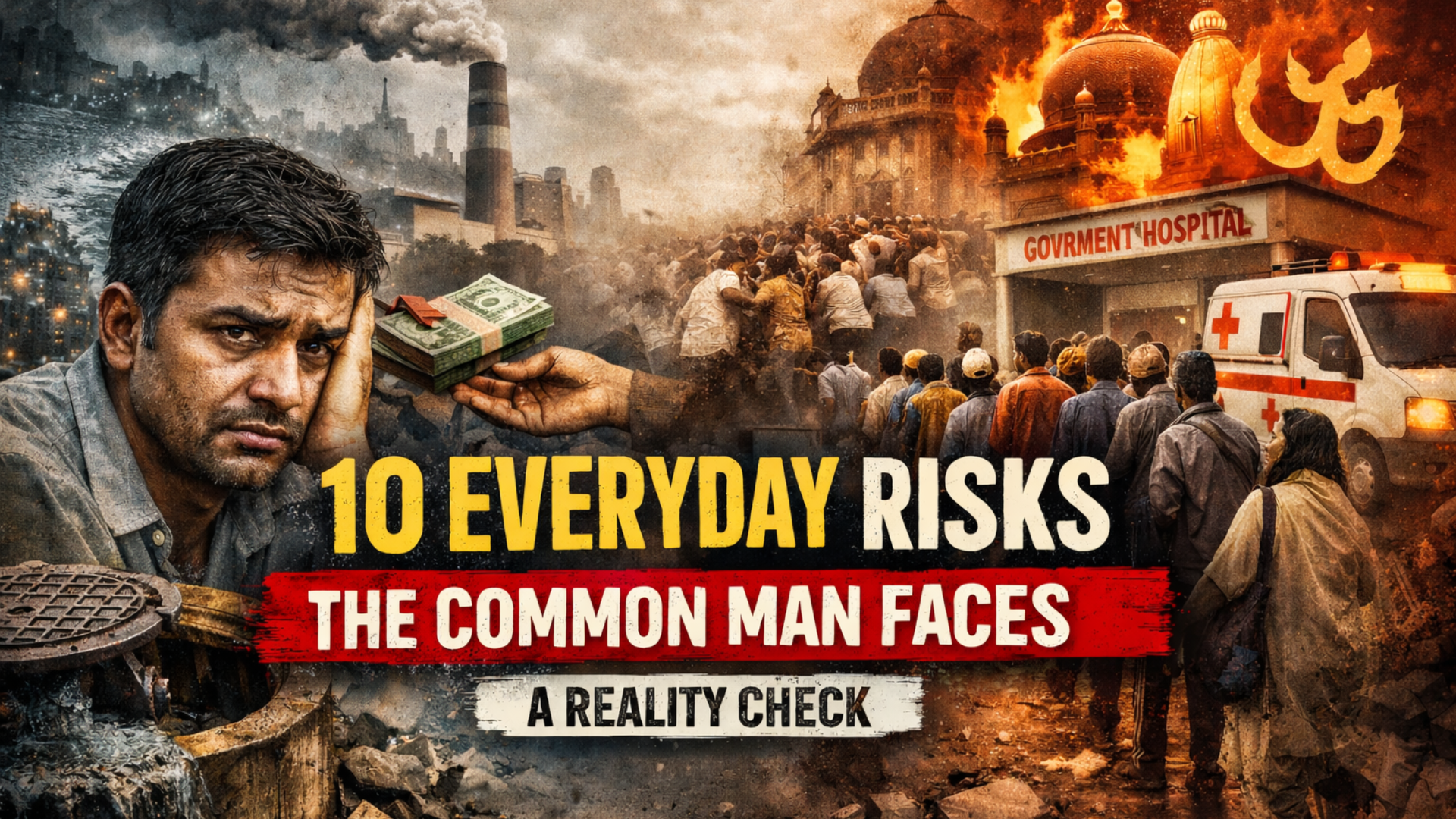
How many ways can an ordinary citizen lose his life – not in war, not in crime – but just by living daily life?
The common man wakes up every day to earn, feed his family, and survive.
But sometimes survival itself feels uncertain.
Let’s talk honestly.
1. Drinking Contaminated Water
Clean water is a basic right. Yet water contamination remains a recurring issue in many Indian cities and towns.
In recent years, cities like Indore and parts of Madhya Pradesh reported cases where people fell ill after alleged sewage mixing in water supply lines.
Across India, outbreaks of waterborne diseases such as cholera, diarrhea, and typhoid still happen especially during monsoons.
For many families, the tap water they trust can turn into a hospital visit.
And sometimes, worse.
2. Breathing Toxic Air
Air pollution has become one of India’s biggest silent killers.
Cities like Delhi, Kanpur, and Lucknow frequently record hazardous Air Quality Index (AQI) levels.
According to global health studies, air pollution contributes to lakhs of premature deaths in India every year due to respiratory and heart-related diseases.
You don’t see it.
You don’t smell it clearly.
But it slowly damages lungs especially for children and the elderly.
Breathing shouldn’t be dangerous.
Yet in many cities, it is.
3. Falling Into Open Drains or Manholes
Every monsoon, news channels show the same visuals:
• Waterlogged streets
• Open manholes
• Uncovered drainage lines
In cities like Mumbai and Gurugram, there have been tragic incidents where people fell into open drains during heavy rains.
Sometimes it’s called “an unfortunate accident.”
But basic urban safety is not a luxury it is governance 101.
4. Stampedes During Public Gatherings
Religious events, temple queues, political rallies, and festivals sometimes turn deadly due to crowd mismanagement.
India has witnessed multiple stampede tragedies over decades where innocent people lost their lives simply because the crowd surged uncontrollably.
They went with faith.
They went with hope.
They never imagined not returning home.
5. In the Name of Religion
Communal tensions have, at times, led to violence in different parts of the country.
When mobs form, the common man who just wants to earn and go home often becomes collateral damage.
Most Indians live peacefully.
But when identity politics turns violent, the cost is paid by ordinary families.
6. In the Name of Caste
Despite progress, caste-based discrimination and violence still make headlines.
Rural clashes, honor-related crimes, and targeted aggression remind us that social equality remains a work in progress.
Development has moved fast.
Mindsets sometimes haven’t.
7. In the Name of Language
India’s diversity is its pride.
Yet language debates whether regional vs national occasionally create tension.
While most disagreements remain verbal, identity-based aggression has led to uncomfortable and sometimes unsafe situations.
The irony?
Our diversity should unite us.
8. Corruption and Negligence
Corruption doesn’t always look dramatic.
Sometimes it looks like:
• Poor-quality construction
• Ignored safety norms
• Delayed emergency response
• Substandard materials
• Paper approvals without inspection
When bridges collapse or illegal structures fail, investigations often mention negligence.
And negligence can be fatal.
9. Waiting in a Government Hospital Line
Government hospitals are lifelines for millions of Indians.
But overcrowding is real.
• Shortage of beds
• Long queues
• Overworked staff
• Limited equipment
There have been documented cases where patients died waiting for treatment.
Doctors work hard.
But systems sometimes break under pressure.
And the poor suffer most.
10. Private Hospital Bills
On the other side, private healthcare can financially crush families.
Medical emergencies often push middle-class households into debt.
Studies show that healthcare expenses are one of the major reasons Indian families fall below the poverty line.
Sometimes the patient survives.
But the savings don’t.
People also read : zakir-khan-vs-kumar-vishwas
The Silent Stress of the Common Man
Beyond physical danger, there is mental stress:
• Job insecurity
• Rising inflation
• Loan pressure
• Fear of sudden medical emergencies
Stress-related health problems are rising across urban India.
Survival isn’t just physical.
It’s psychological too.
But This Is Not the Full Story
India has also made massive progress:
• World-class highways
• Digital payments revolution
• Expanding metro systems
• Space achievements
• Growing startup ecosystem
The country is moving forward.
The question is – Is the common man moving forward safely with it?
What Real Development Should Mean
True development is not just GDP numbers.
It means:
• Clean drinking water
• Safe public infrastructure
• Pollution control
• Efficient hospitals
• Law enforcement without bias
• Dignity beyond caste, religion, or language
The common citizen doesn’t demand luxury.
He demands security.
The Real Question
Instead of asking:
“How many ways can a common man die in India?”
Maybe we should ask:
How many systems can we strengthen so he doesn’t have to?
Awareness is not negativity.
Criticism is not hatred.
Caring about safety is patriotism.
Final Thought
India’s strength is its people.
If the common man feels safe –
India becomes unstoppable.
If he feels vulnerable –
No growth statistic can hide that truth.
The conversation should not divide us.
It should push us to improve.